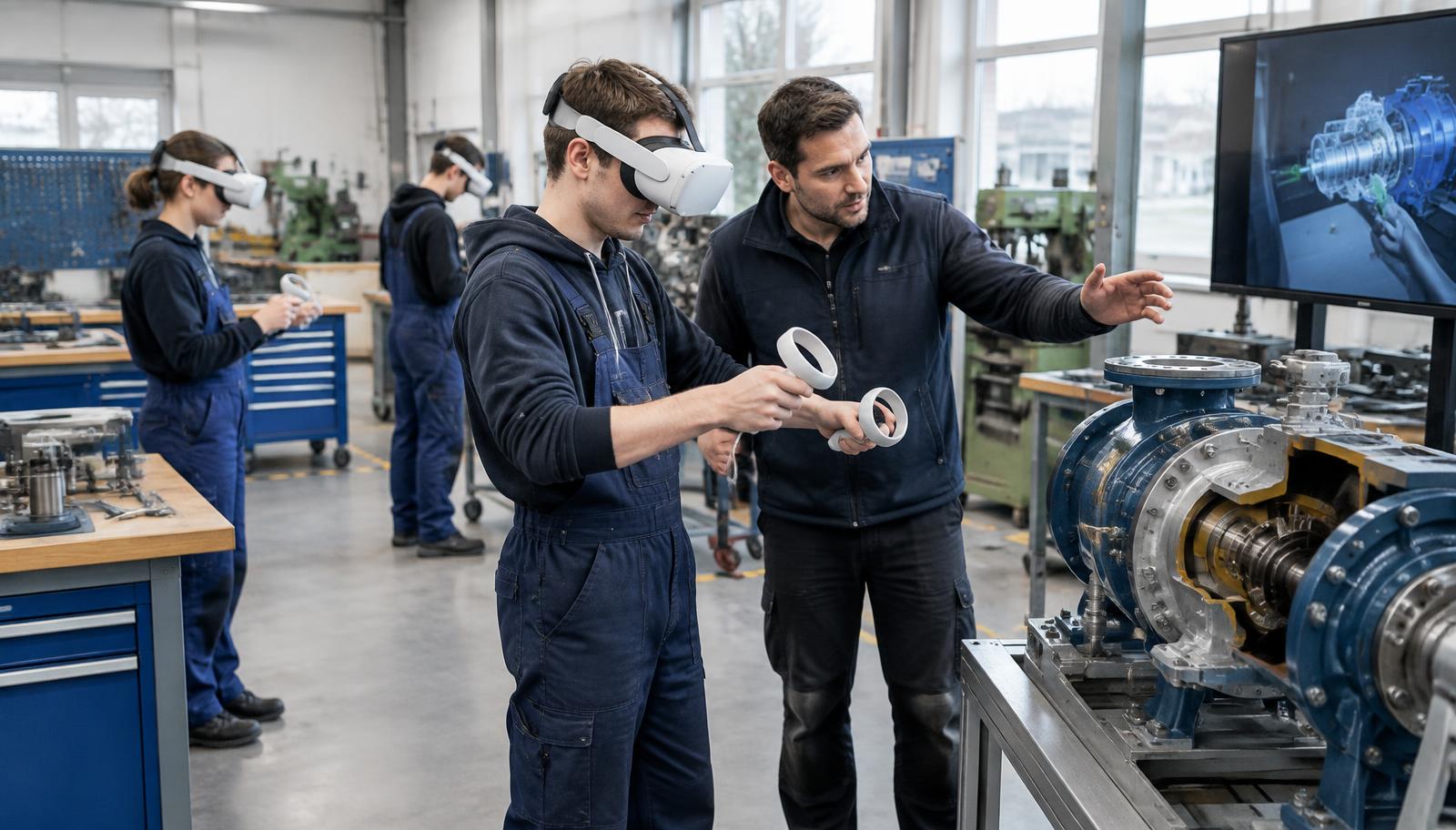
VR Training in Vocational Colleges: Rehearse the Risk Before the Workshop
VR should prepare learners for the workshop — not replace it
Vocational competence ultimately has to transfer to real tools, equipment, people and conditions. VR is most valuable before or between live practice: learners can rehearse sequence, hazard recognition and decisions without consuming material, occupying scarce equipment or exposing anyone to a preventable mistake.
The aim is not perfect virtual realism. It is better preparedness for supervised physical practice.
Prioritise tasks where repetition is constrained
Good candidates include lockout/tagout decisions, machine start-up and shutdown, fault finding, emergency response, inspection and maintenance sequences. These tasks may be hazardous, infrequent, expensive to stage or dependent on equipment shared across a large cohort.
A task analysis should separate what can be learned in simulation — sequence, recognition, diagnosis and decision-making — from tactile skills that still require the workshop.
Build around instructor judgement
Instructors should help define the scenario, common errors, acceptable shortcuts and assessment criteria. A useful simulation makes learner decisions visible so the instructor can ask why a step was taken, replay an error and connect it to the real system.
Dashboards and scores are secondary. The strongest evidence is often a richer debrief and a learner arriving at the workshop able to explain the procedure and its hazards.
Plan for mixed cohorts and real timetables
A college rarely needs one headset per learner. Rotation models can combine a VR station with physical components, schematics, peer observation and instructor discussion. This reduces equipment cost and makes waiting time productive.
Provide seated and non-headset alternatives, account for glasses and motion sensitivity, define cleaning procedures, and test whether staff can reset a session without specialist support.
Evaluate readiness, not novelty
Before scaling, compare learners against the same practical readiness criteria used today. Track procedural errors, missed hazards, time to competent completion, instructor interventions and confidence calibrated against performance. Also record setup time, device failures and teacher workload.
Do not promise a percentage improvement before the pilot. Agree the baseline, sample and decision threshold with the institution first.
From one procedure to a reusable programme
XRPK Solutions can help a vocational institution select one high-value procedure, deploy an existing or custom simulation, prepare instructors and run an evidence plan. If the pilot works, the same governance and teaching pattern can be reused across programmes.
See our immersive learning solutions or email us to discuss a technical-college pilot in Denmark, the Nordics, Europe or worldwide.
Plan an Education Pilot
Discuss one learning objective, the constraints and the evidence your institution needs before deciding whether to scale.
XRPK Solutions
European Industry 4.0 solutions — IIoT, AI predictive maintenance & VR training. Kastrup, Denmark & Lahore.